
Hygienic Design
Food Sanitaion Services is your trusted industry partner to reduce food safety risk and strengthen food safety leadership while driving operational excellence.
What is Hygienic Design?
Hygienic design refers to the design and engineering of equipment, facilities, and processes to minimize the risk of biological, chemical, or physical contamination. While it is most commonly associated with the food and beverage industry, it is also a critical standard in pharmaceuticals, cosmetics, and biotechnology.
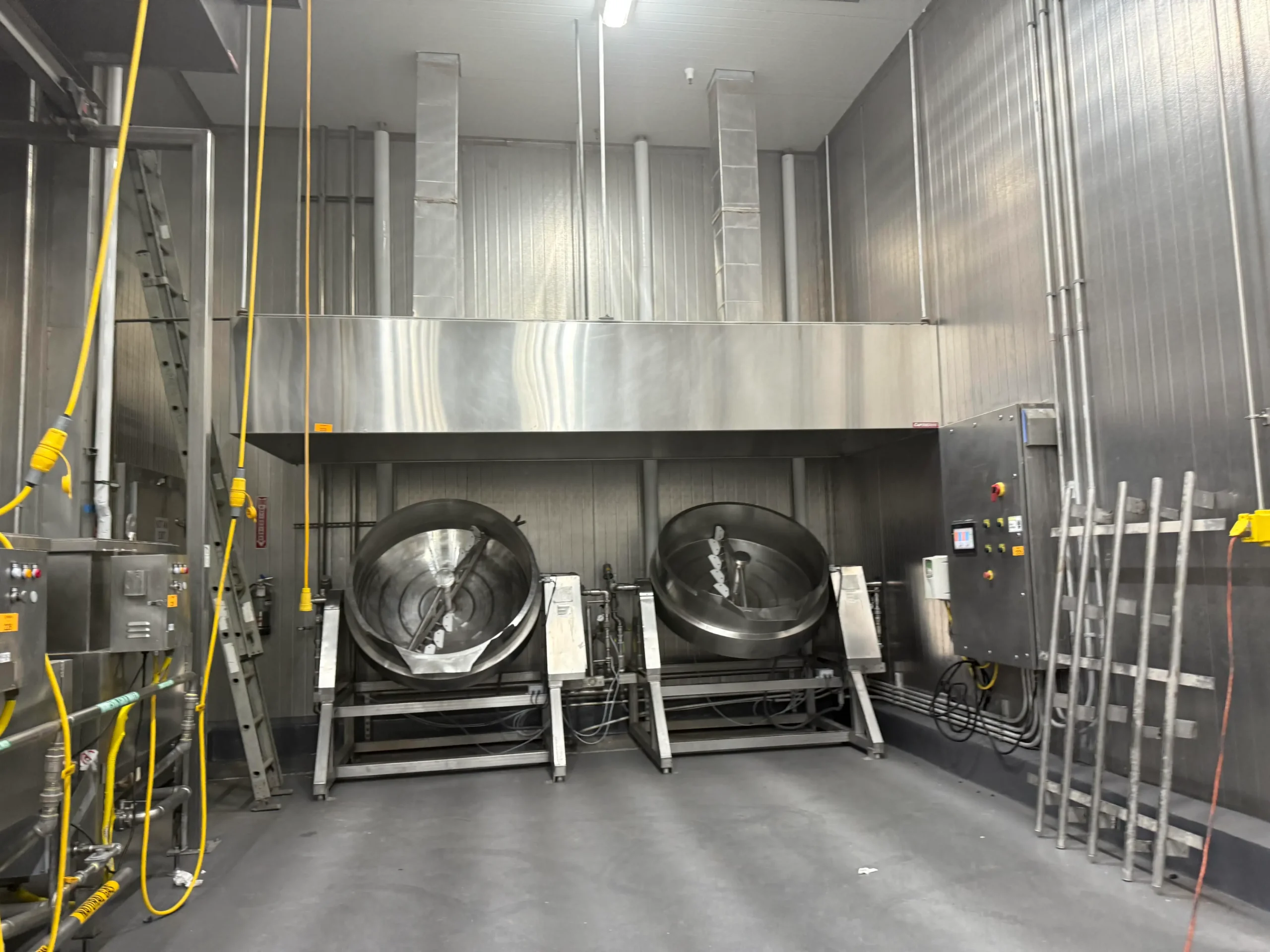
The primary goal is to ensure that every surface is cleanable and that the equipment does not provide “harbor points” where bacteria or mold can grow.
Core Principles of Hygienic Design
Effective hygienic design follows several non-negotiable rules to ensure safety and sanitation:
- Surface Clean-ability: All surfaces must be smooth and non-porous.
This usually involves using high-grade stainless steel (like 304 or
316L) with a specific surface roughness, often measured in Ra. For food contact, an Ra≤0.8μm is a common benchmark. - Accessible for Cleaning: Every part of the machine should be easily accessible for cleaning (either manually or via Clean-In-Place
systems) without requiring extensive disassembly. - Self-Draining: Equipment and piping should be sloped to ensure that liquids (cleaning chemicals, water, or product) drain away completely. Standing water is a major breeding ground for pathogens like Listeria.
- No Dead Spaces: Design must avoid “dead legs” in piping or sharp internal corners (90-degree angles). Instead, internal radii should be curved (filleted) to prevent product buildup.
• Hygienic Joining: Welds must be continuous, smooth, and ground flush. Bolts, threads, and rivets are avoided in product zones because they create tiny crevices that are impossible to sterilize. - Material Compatibility: Materials must be resistant to the corrosive nature of both the product (e.g., acidic juices) and the cleaning agents (e.g., caustic soda).
Regulatory Standards and Organizations
Several international bodies define the specific criteria for what qualifies as “hygienic”:
Organizations
Committed to building a safer global food supply, FSS technical experts help food processors worldwide to implement preventive programs that mitigate and prevent critical food safety challenges. Using robust education programs and customer-centric consulting, we help you instill a company-wide passion for food safety and sustained improvement to efficiency and productivity.
- EHEDG (European Hygienic Engineering & Design Group) Provides detailed guidelines and certification for equipment used in Europe.
3-A Sanitary Standards - A US-based non-profit that sets standards for the dairy and food industry.
FDA (Food and Drug Administration)
Sets the overarching regulatory requirements for food contact materials and safety. - NSF International
Provides third-party certification for equipment used in commercial kitchens and processing plants.
Export to Sheets
Contact Us
Let’s talk about your sanitation needs